 Flooring Correct
Tile, chosen with
the grout and the
layout in mind.
Porcelain, ceramic and natural stone for kitchens, baths, showers and entries. Come see the sizes and the grout colors together, before anything is ordered.
Tile is the hardest working floor in the house. It does not mind water, it does not mind a dog coming in off a wet driveway, and a well set tile floor can outlast the kitchen it was installed in. It also carries the most decisions. Material, size, finish, layout and grout all get settled before anything is ordered, and every one of them changes how the finished room reads.
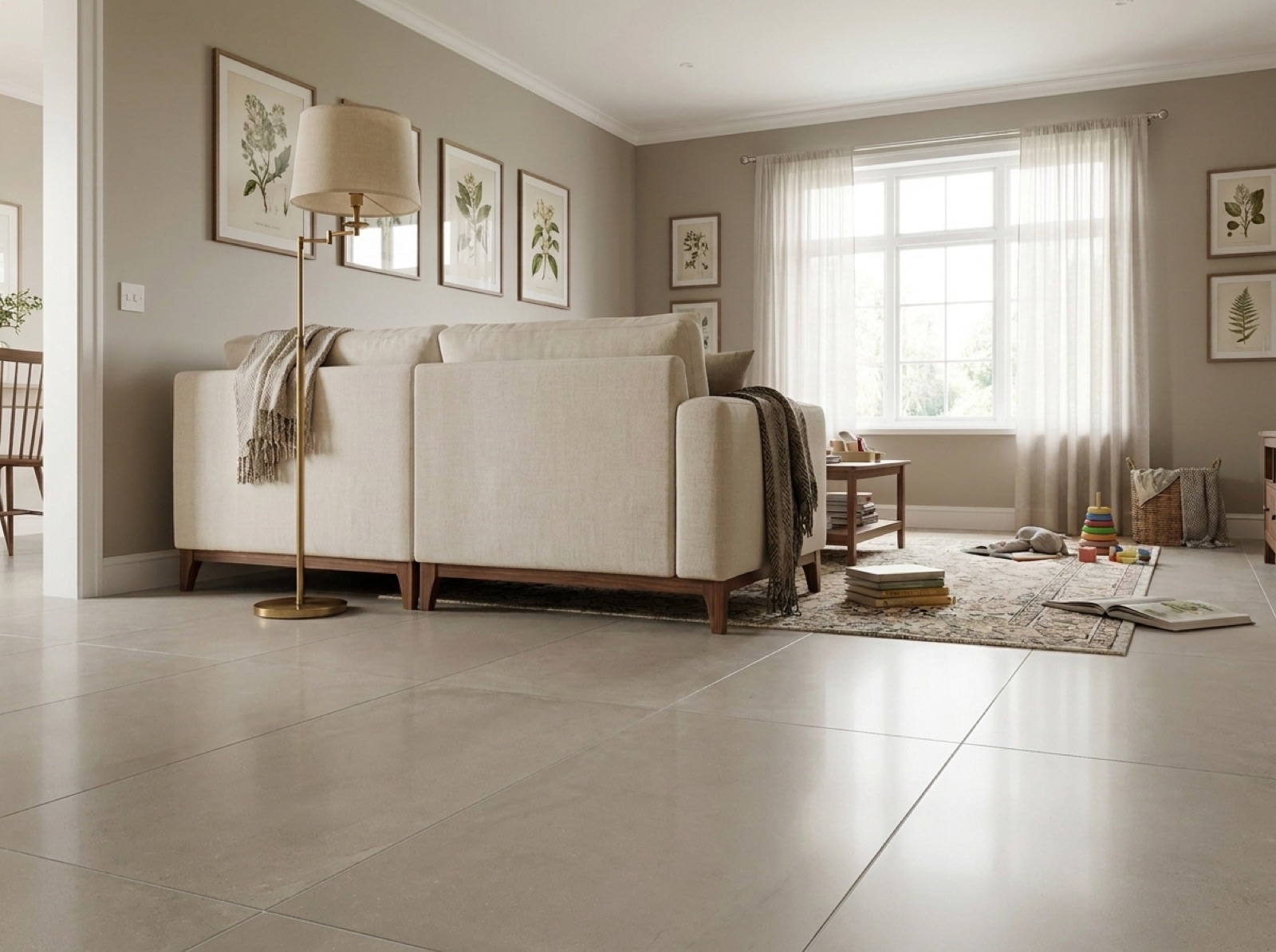
Porcelain or ceramic.
Both are fired clay. The difference is density. Porcelain is pressed from finer clay and fired hotter, and by definition it absorbs 0.5 percent of its weight in water or less. Ceramic is more porous, softer to cut, and usually less expensive.
That density is why porcelain goes almost anywhere: floors, showers, entries, laundry rooms and covered patios. Through body porcelain carries its color all the way through the tile, so a chipped edge does not reveal a pale center. Ceramic still has a job. On a backsplash or a shower wall, where nothing is walking on it, ceramic offers glaze colors and handmade looks at a friendlier price.
Two numbers on the sample tag are worth reading. PEI rates surface wear from 1, which is wall only, up to 5, which is heavy commercial traffic. Most residential floors want a 3 or better. DCOF measures wet slip resistance, and 0.42 or higher is the accepted threshold for level interior areas that get wet, which is the number to check before a floor tile goes into a shower or an entry.
Natural stone asks for more.
Marble, travertine, slate and limestone are quarried rather than manufactured, so every piece is different and every piece is porous. Stone wants sealing, it wants pH neutral cleaners, and an acidic spill will etch a polished marble no matter how well it was sealed. Some homeowners want exactly that patina. Others are happier with a porcelain printed from stone that will never ask for a thought. Both are on the floor in the showroom, side by side, which is the quickest way to find out which one you are.
Large format changes the room.
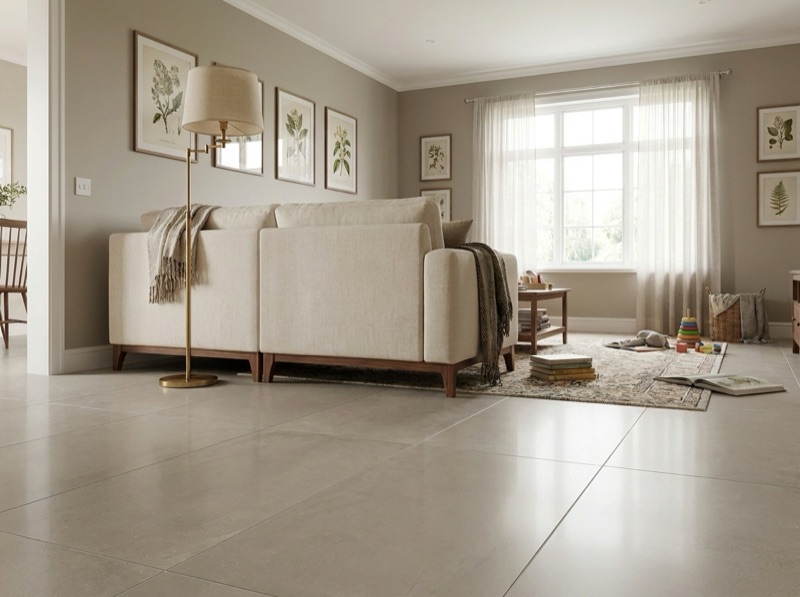
Anything with a side of 15 inches or longer counts as large format. Fewer grout lines make a small bathroom read larger and a kitchen read calmer, which is why 12 by 24 has become the default field tile and why long plank porcelain in sizes like 8 by 48 gives a wood look you can mop.
Big tile is less forgiving of a bad subfloor. The flatness requirement is real: tile with a side of 15 inches or more calls for a substrate flat within about an eighth of an inch over ten feet. If the floor is out, it gets flattened first, because a tile bridging a hump shows lippage at the edges or cracks later. Offset patterns get limited too. A running bond on a long plank is held to roughly a third rather than a half, so the crown in the middle of one tile does not land against the low corner of the next.
Grout is a decision, not a detail.
Grout is a small share of the material cost and a large share of what anyone notices. Matching it to the tile makes the floor read as one surface. Contrasting it draws the pattern and makes every cut visible, which is a choice rather than a mistake, and worth making on purpose.
Joint width follows the tile. Rectified tile, cut to precise edges after firing, can run tight joints. Pressed tile with a softer edge needs a wider joint to absorb the variation. Sanded grout goes in the wider joints, unsanded in the narrow ones. Cement grout is porous and should be sealed, then resealed every couple of years. Single component and epoxy grouts cost more up front and skip the sealing, which is why they show up in showers and in kitchens with real traffic. Movement joints matter as much: a tile field needs a soft joint where it meets the walls and at intervals across a long run, or the floor has nowhere to go when the house moves with the season.
Showers, entries and mudrooms.
Tile is the only floor most people will put in a shower, and a shower is a waterproofing job before it is a tile job. The membrane, the slope to the drain, and the way the curb and the niche are detailed are what keep the wall behind it dry. The tile is the finish over the top of that work.
Entries and mudrooms are the other place tile earns its keep here. Salt, slush and grit come in off the driveway all winter, and a porcelain floor with a textured face takes it without complaint. Tile stays cool underfoot in July as well, and it pairs with in-floor radiant heat better than any other material, which takes the edge off a January morning.
Tile does not stop at the floor. Backsplashes, shower walls, fireplace surrounds and accent walls come out of the same racks, so the floor and the wall get chosen together instead of a month apart. Offices, schools and other commercial spaces lean on tile for the same reasons, in entries, restrooms and corridors that have to stay presentable through a whole year. That is a large part of our commercial flooring work.
Living with it.
- Sweep or vacuum the grit before it gets ground into the glaze. Grit does more damage than water ever will.
- Damp mop with a pH neutral cleaner. Keep vinegar and bleach off natural stone and off cement grout.
- Reseal cement grout when water stops beading on it rather than on a calendar.
- Keep a box of the tile after the install. A matching replacement two years later is otherwise a hunt.
- Felt pads on chair legs. Tile is hard, but glaze is not indestructible.
Where tile is not the answer.
Tile is cold and hard, and that is the honest trade. Bedrooms and finished basements usually want carpet. Living space that wants warmth underfoot with water resistance often goes to luxury vinyl plank or sheet vinyl instead, and hardwood, engineered hardwood and laminate cover the rest of the house. Plenty of homes end up with tile in the wet rooms and something else everywhere else, and that is usually the right call.
See it in the showroom, then get a number.
Tile looks different in a four inch sample than it does across a room, and the grout color changes it again. Bring the cabinet door, the counter chip or a photo of the room and we will lay the options out on the counter with you. When the tile and the grout are settled, the estimate is free and the measure happens in your house, on your subfloor, with the doorways and the transitions accounted for. Installation is handled by our own crews, with 15 or more years of experience and most at 25 or more years.
Tile brands we carry in the showroom include Virginia Tile, DalTile, MSI and Emser.
Luxury vinyl plank
Waterproof and warmer underfoot, with a wood or stone look and no grout.
See luxury vinyl plank CompareSheet vinyl
Few seams and a softer surface for baths and laundry rooms on a tighter budget.
See sheet vinyl All floorsEvery floor we carry
Hardwood, engineered, tile, vinyl, laminate and carpet under one roof.
Browse flooringRecent installs nearby.
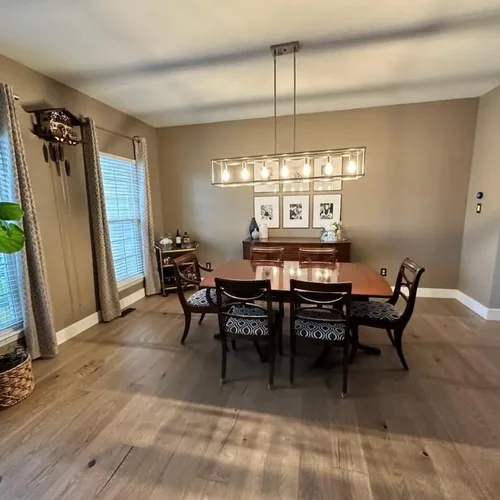
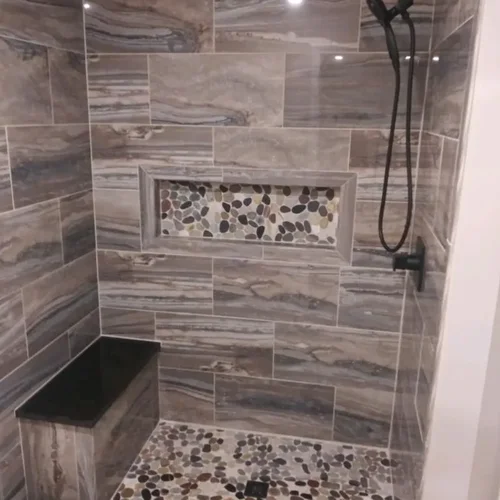
Real rooms from real installs around St. Charles County. We do not publish names or addresses. See more of our work.
“Floors are PERFECT! ... Installation was a breeze and EVERY person was helpful and hardworking. Only mistake we made was not replacing the old floors sooner!”
Before you order.
Ask the showroom anything. Someone who sells and measures tile every week will pick up.
636-332-0654Density. Porcelain is pressed from finer clay and fired hotter, and by definition it absorbs 0.5 percent of its weight in water or less. Ceramic is more porous and usually less expensive. Porcelain goes almost anywhere, including showers, entries and outdoors. Ceramic is a sound choice on walls and backsplashes where nothing is walking on it.
It is less forgiving of an uneven subfloor. Tile with a side of 15 inches or more calls for a substrate flat within about an eighth of an inch over ten feet, so low spots get filled and high spots get ground before any tile is set. Offset patterns are also kept to about a third rather than a half so the crown of one plank does not sit against the low corner of the next.
Cement grout does, because it is porous, and it wants resealing every couple of years. Single component and epoxy grouts cost more up front and skip the sealing, which is why they show up in showers and in kitchens that see real traffic. We will tell you which one a given tile and joint width calls for.
Often yes, as long as the floor tile has enough wet slip resistance. The number to look for is a DCOF of 0.42 or higher for level interior areas that get wet. A shower is also a waterproofing job before it is a tile job, so the membrane, the slope to the drain and the curb detailing matter as much as the tile you pick.
Yes. Estimates are free. Flooring Correct also offers in-showroom selection help, in-home measure and professional installation.
The tile vocabulary, defined
Every term on the back of a sample, defined plainly. These are the ones that come up most on a tile job. The full library is in the materials encyclopedia.
Tile in your town
Every town below has its own tile page, written around the housing stock that is actually there rather than the same page with the name swapped. The full map is on the service area page.
Start with a free estimate.
Tell us the rooms and roughly when you want it done. You get a real number and an in-home measure.
Get it right the first time, starting with a walk through the showroom.
636-332-0654