 Flooring Correct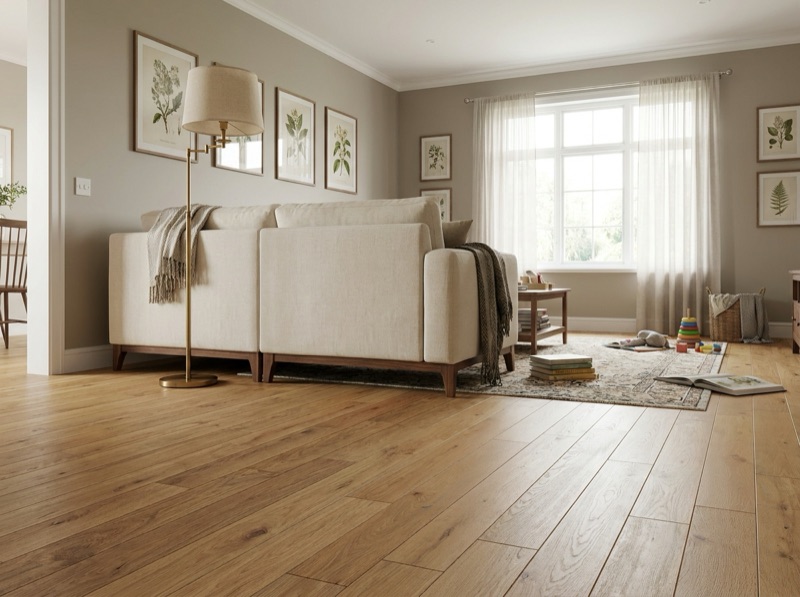
One piece of wood.
Sanded and made
new again.
Solid hardwood is the only floor you can take back to bare wood and finish a second time. Come put your hand on the species and the sheens before you commit to either one.
Solid hardwood is exactly what the name says. Each plank is milled from one piece of lumber, top to bottom, with no core and no layers. That single fact is why it looks the way it does, why it has to be treated with a little respect, and why it can outlive the people who chose it.
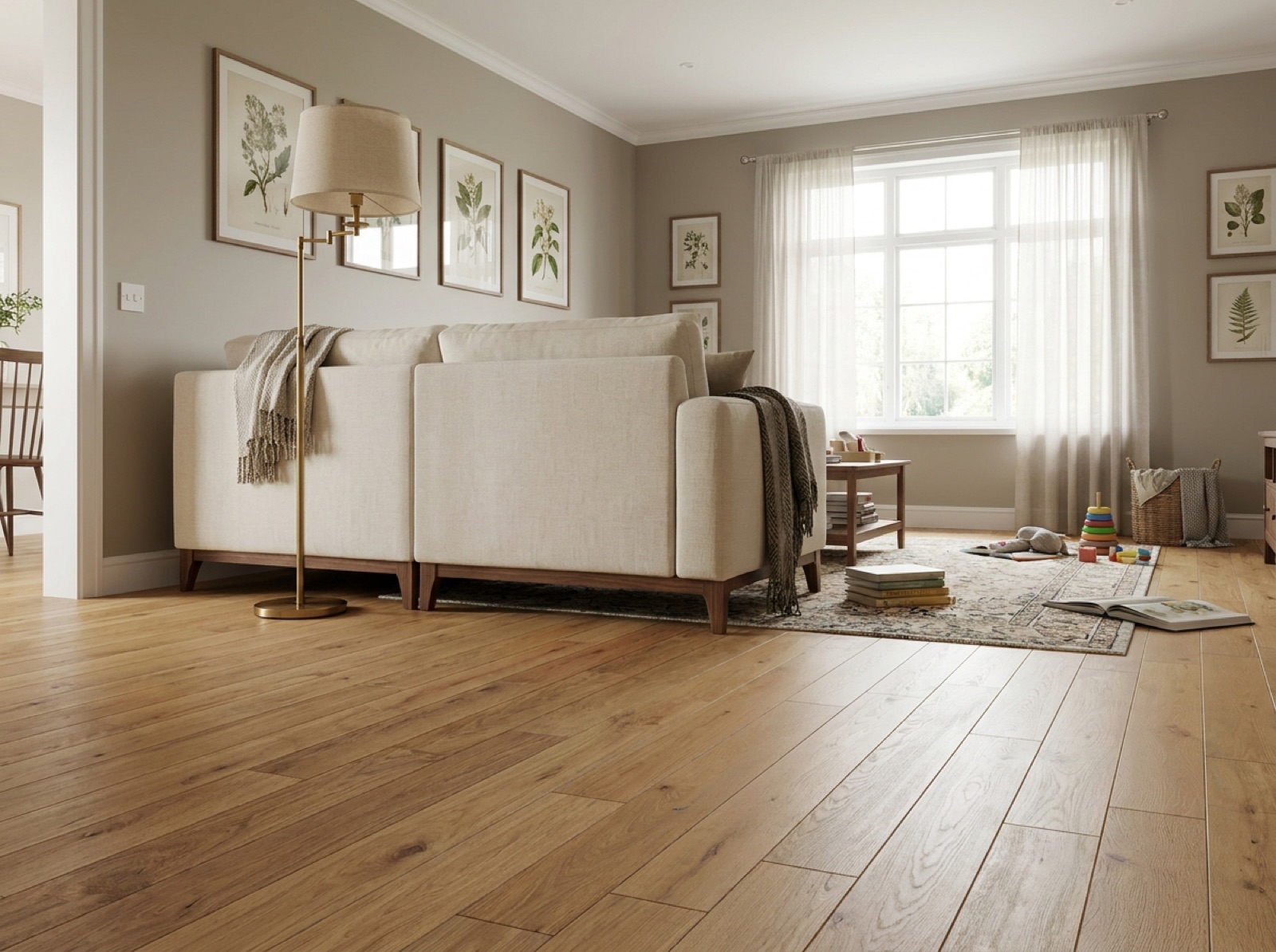
What solid hardwood is, and where it belongs.
Most solid flooring is three quarters of an inch thick, tongue and groove on all four edges, and nailed or stapled down to a wood subfloor. Because it is one piece of wood, it moves with the air around it, which sets the rules for where it can go. Solid belongs on grade and above grade: main floors, bedrooms, hallways, stairs, dining rooms. It does not belong on a concrete slab or below grade in a basement, where moisture comes up through the floor. Those rooms want engineered hardwood, luxury vinyl plank or tile instead, and we will say so rather than sell you the wrong material.
The upside of that solid construction is real. Wood does not hold dust and dander the way a soft surface does, which is why households with allergies often move toward it, and it is repairable in a way no wear layer product can match.
Species, and what the hardness number means.
Species decides grain, color range and how well the floor shrugs off a dropped pan. Hardness is measured on the Janka scale, and higher is more dent resistant, though grain pattern hides damage just as effectively as hardness prevents it.
- Red oak. The American baseline. Strong grain, warm pink undertone, takes stain evenly and hides normal life better than almost anything else.
- White oak. Harder than red, with a straighter, quieter grain and a neutral to slightly cool tone. It is the species behind most of the light and greige looks people bring us photos of.
- Hickory. The hardest of the common domestics, with dramatic color variation from board to board. Busy, forgiving and not for everyone.
- Maple. Tight, subtle grain and a pale creamy face. It is hard, but its smooth grain shows dents and scratches more readily, and it can blotch under stain.
- Walnut. Deep chocolate brown straight from the tree, so it needs no stain to be dark. Softer than oak, and worth it for the color.
Prefinished or site finished.
Prefinished planks arrive with an aluminum oxide finish already cured onto them. The room is walkable the same day, there is no dust or odor, and the factory finish is hard. Each board carries a small bevel at the edge, which reads as a fine line between planks.
Site finished floors go down raw and are sanded and coated in the house. You get a flat, seamless surface with no bevels, a custom color, and the ability to match wood that is already in the home. The trade is time, dust and a cure period before furniture and rugs go back.
Finishes and sheen.
Oil modified polyurethane ambers slightly with age and warms the wood. Water based polyurethane stays clear, so a white oak floor stays as pale as the day it was coated. Hardwax oil penetrates instead of sitting on top, which gives a low, natural look and lets scuffs be spot repaired without recoating a whole room.
Sheen matters more than most people expect. Matte and satin hide dust, footprints and fine scratches. Semi gloss reflects more light and shows every one of them. Surface texture does similar work: wire brushed floors pull out the soft grain and camouflage wear, and hand scraped boards carry a deliberate irregularity that disguises real life.
Missouri humidity is the variable nobody plans for.
Wood is hygroscopic. It takes on moisture in a humid St. Charles County August and gives it up when the furnace runs in January, changing dimension slightly as it does. That is normal, and it is manageable.
Keep indoor relative humidity roughly between 30 and 50 percent year round and the movement stays small. Let the house swing hard and you see the two classic symptoms: thin gaps between boards in deep winter, and cupping, where board edges rise above their centers, in a damp summer or after a leak. A humidifier on the furnace and a bath fan that vents outside solve most of it. Narrower boards move less than wide ones, so in a house that is hard to keep stable, a narrower plank is the safer specification.
Material also needs to acclimate inside the house before it is installed, and the subfloor moisture content gets checked before the first nail. That is part of what the in-home measure is for.
Refinishing is the whole point.
A three quarter inch solid floor has roughly a quarter inch of usable wood above the tongue. That is enough for several full sandings over the life of the floor, which means the same boards can be recolored when tastes change, or brought back after twenty years of a dog. Lighter work is easier still: a screen and recoat abrades the existing finish and adds a fresh coat without touching the wood, and it costs a fraction of a full sand.
Living with it.
- Sweep or vacuum on the hard floor setting. Grit is what scratches a finish, not shoes.
- Damp mop with a cleaner made for wood. No steam, no wet mopping, no vinegar.
- Felt pads under every furniture leg, and replace them when they load up with grit.
- Mats at the doors, and rugs in the traffic lanes where the sun hits hardest.
- Wipe spills quickly. Standing water at a seam is the one thing solid wood will not forgive.
See it in the showroom first.
Species, stain and sheen all read differently under store lighting than they do in a room with your windows and your walls, so take samples home and look at them in the morning and at night. When you have it narrowed down, the estimate is free and the measure happens in your house, where the subfloor, the stair nosings and the transitions to the next room get decided. Installation is handled by our own crews, with 15 or more years of experience and most at 25 or more years. Offices, showrooms and schools are welcome too, and are covered on our commercial flooring page.
Solid hardwood brands we carry in the showroom include Portercraft, Paramount, Hartco, Jackson Hardwood, Casabella, Hudson Collection, Durango and National Flooring Products.
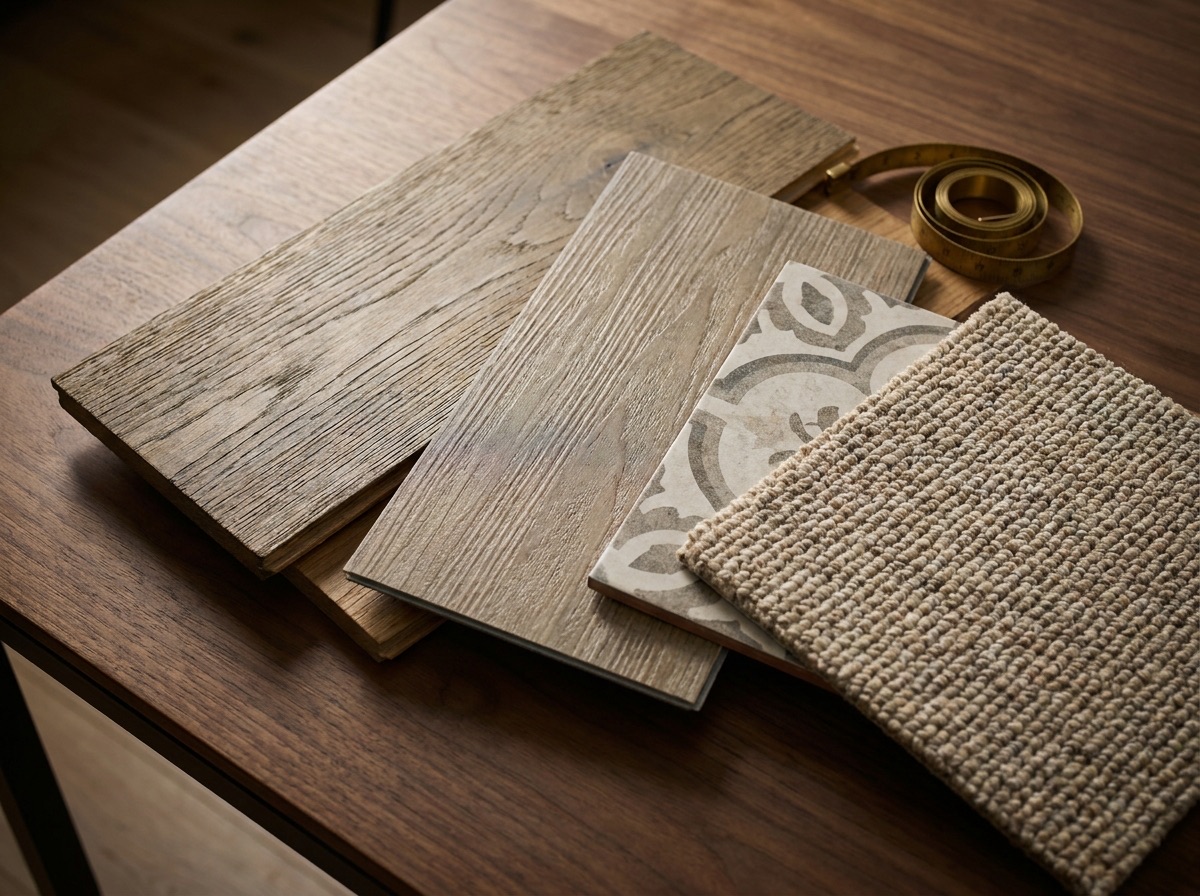
Engineered hardwood
A real wood face over a stable core, for slabs, basements and wide plank looks.
See engineered hardwood CompareLaminate
A printed wood look with a tough wear layer, at a friendlier number per square foot.
See laminate All floorsEvery floor we carry
Hardwood, engineered, tile, vinyl, laminate and carpet under one roof.
Browse flooringAlso worth a look: luxury vinyl plank tile sheet vinyl carpet
Recent installs nearby.
-
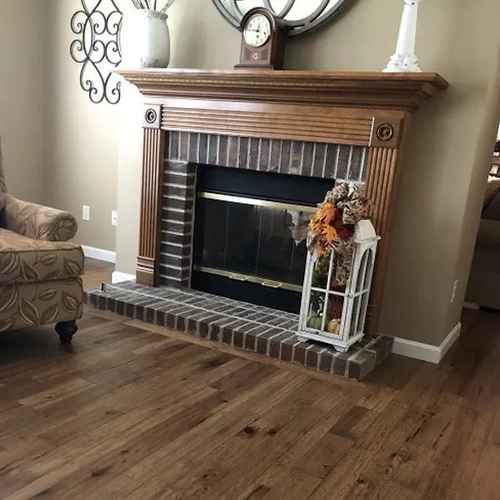
-
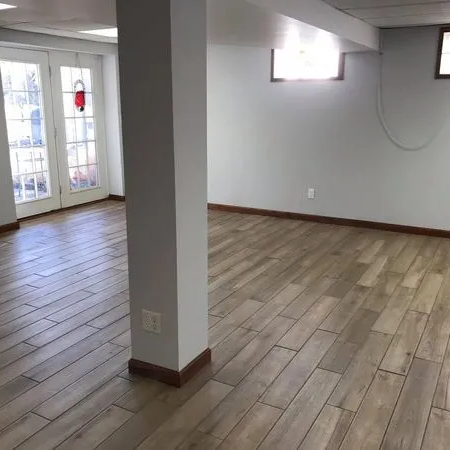 Wood look tile in a finished basement.
-
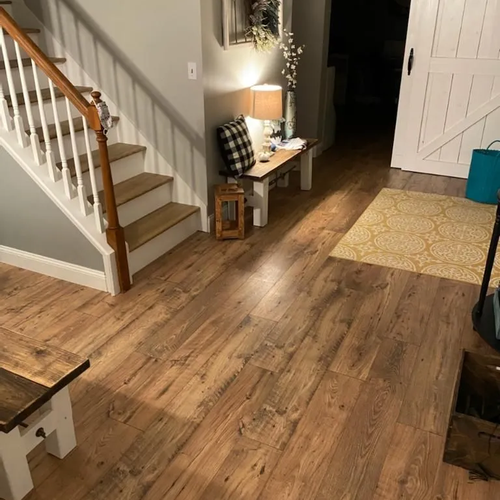

Real rooms from real installs around St. Charles County. We do not publish names or addresses. See more of our work.
“I had a great experience with Flooring Correct, Jonah and Steven were top notch, had hardwood laid in many rooms, carpet in the bedrooms.”
Before you order.
Ask the showroom anything. Someone who sells and measures wood floors every week will pick up.
636-332-0654No. Solid wood is nailed to a wood subfloor and it reacts to moisture, so below grade rooms and slabs are not the right place for it. That is what engineered hardwood, luxury vinyl plank and tile are for. Bring the room and we will point you at the material that belongs in it.
A three quarter inch solid floor has roughly a quarter inch of wood above the tongue, which is usually good for several full sandings across the life of the floor. How many depends on how aggressively it was sanded each time. A screen and recoat, which abrades the finish only, can be done far more often and costs much less.
Wood gives up moisture when the furnace runs and the indoor air dries out, so the boards shrink slightly and thin seasonal gaps open. They close again in summer. Holding indoor relative humidity in the 30 to 50 percent range year round keeps that movement small and predictable.
Prefinished is factory coated with an aluminum oxide finish and is walkable the day it goes down, with a small bevel at each edge. Site finished is sanded and coated in the house, which gives a flat seamless surface and lets the color be matched to existing wood, at the cost of dust, odor and cure time. Both are good floors, they just fail different tests.
Yes. Estimates are free. Flooring Correct also offers in-showroom selection help, in-home measure and professional installation.
The hardwood vocabulary, defined
Every term on the back of a sample, defined plainly. These are the ones that come up most on a hardwood job. The full library is in the materials encyclopedia.
Solid hardwood in your town
Every town below has its own solid hardwood page, written around the housing stock that is actually there rather than the same page with the name swapped. The full map is on the service area page.
- Augusta
- Ballwin
- Chesterfield
- Cottleville
- Creve Coeur
- Dardenne Prairie
- Defiance
- Ellisville
- Eureka
- Flint Hill
- Foristell
- Hawk Point
- Innsbrook
- Josephville
- Lake Saint Louis
- Manchester
- Marthasville
- Maryland Heights
- Moscow Mills
- New Melle
- O'Fallon
- Old Monroe
- St. Charles
- St. Peters
- Troy
- Warrenton
- Weldon Spring
- Wentzville
- Wildwood
- Winfield
- Wright City
Start with a free estimate.
Tell us the rooms and roughly when you want it done. You get a real number and an in-home measure.
Get it right the first time, starting with a walk through the showroom.
636-332-0654