 Flooring Correct
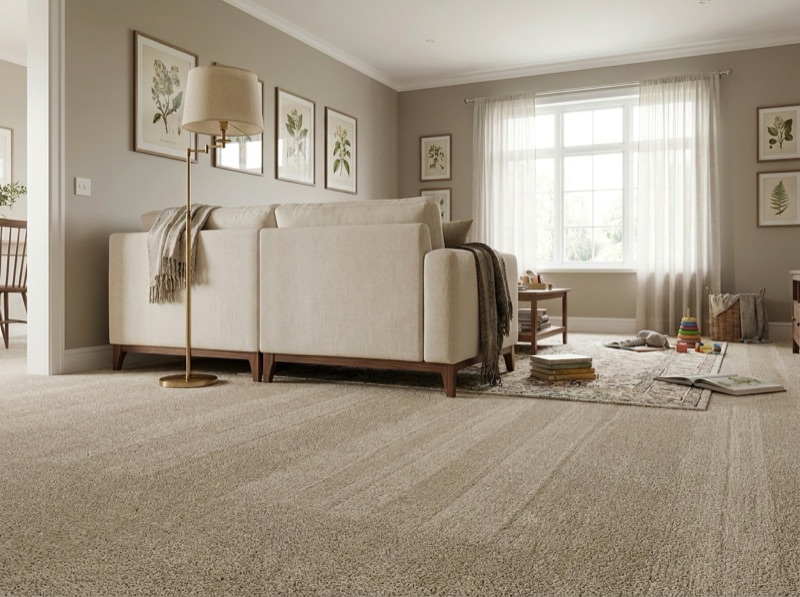
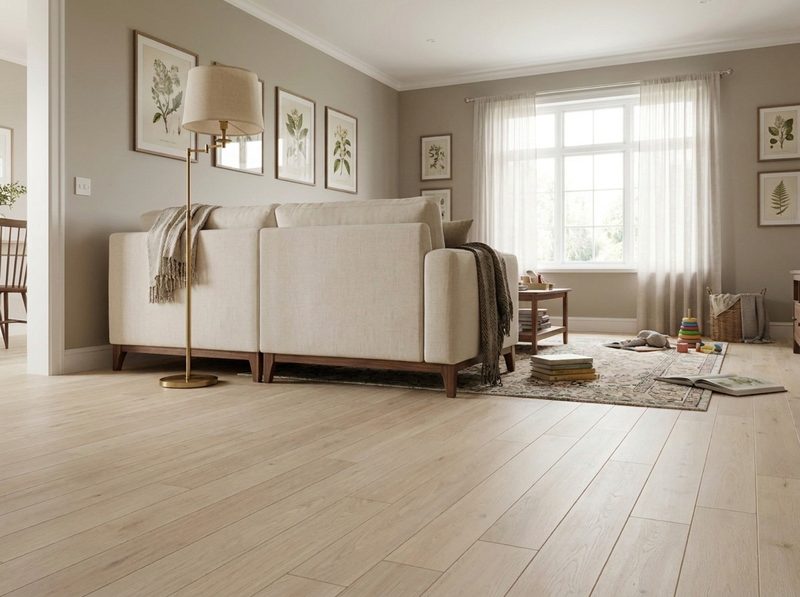
One piece of floor,
and nowhere for
water to go.
The value floor for laundry rooms, utility rooms and baths. Come roll out a sample on the showroom floor and see the pattern at full size instead of on a two inch chip.
Sheet vinyl arrives on a roll rather than in a box, and that single fact is what it is good at. In a room narrow enough to cover in one piece, the finished floor has no joints at all, which is why it has held its place in laundry rooms, mudrooms and hall baths for decades. It is also the least expensive way to cover a floor properly, and the printing on a current sheet is a long way from the pattern most people picture.
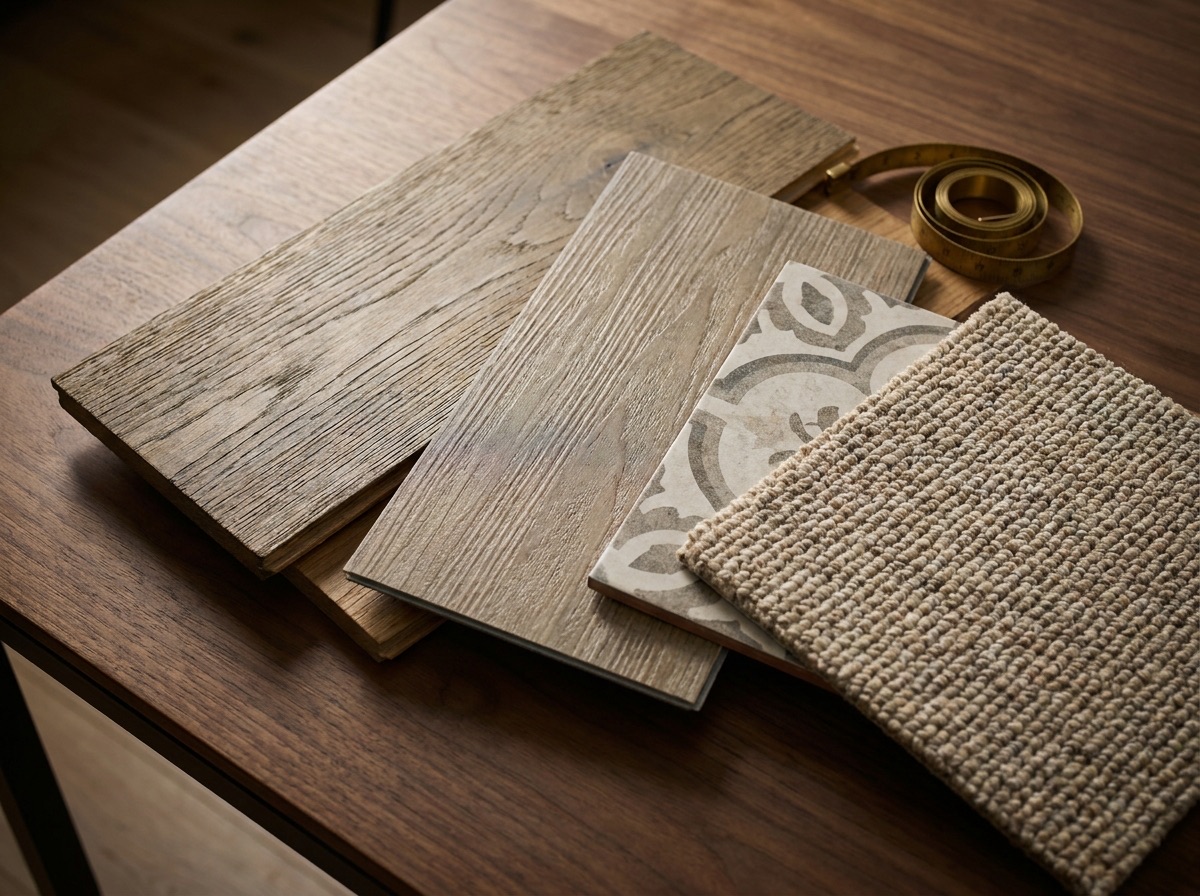
One piece, and that is the point.
Sheet vinyl is made in wide rolls, commonly twelve feet across. A standard laundry room, utility room or hall bath fits inside that width, so the floor goes in wall to wall with no seam anywhere. Water from a toilet ring or a washer hose has nowhere to travel. It sits on the surface until you wipe it up rather than working down into a joint and reaching the subfloor. That is a real advantage over any floor built from planks or tiles, no matter how water resistant the individual pieces are.
Bigger rooms do need a seam. A seam done properly is bonded or heat welded so it behaves like the rest of the sheet, and where it falls is a decision, not an accident. Ask before the order goes in. Placed under a cabinet run, along a quiet wall or inside a doorway, you will stop noticing it within a week.
What is actually in a sheet.
Every sheet is built in layers, and the differences between a budget roll and a good one live in two of them.
- Wear layer. The clear film on top that takes all the traffic. It is measured in mils, and it is the single best predictor of how the floor looks in year five. A thin wear layer dulls and scuffs where people pivot. A thicker one keeps its sheen and its print.
- Urethane finish. A coating over the wear layer that resists scuffing and makes routine cleaning easier. Better lines carry a better one.
- Design layer. The printed film that carries the wood, stone or tile look. Look at how long the pattern runs before it repeats, and look at it at full width rather than on a chip.
- Backing. Felt backed sheets are glued down across the whole floor. Fiberglass backed sheets lie flatter, are more dimensionally stable and are usually fastened only at the perimeter, which makes them more forgiving over an imperfect subfloor and easier to lift later.
- Cushion. Some sheets carry a foam core that softens the floor underfoot and quiets a room. It is why a vinyl kitchen is easier on your legs than a tile one.
Where it earns its place.
Laundry and utility rooms first, because those are the rooms most likely to flood and the ones where a seamless floor pays for itself. Then hall baths, mudrooms, basement bonus rooms and back entries. It is a sensible kitchen floor when the budget has to stretch across several rooms at once, and it is a common choice in rental property, where a floor has to be replaceable without a large project. The same reasoning carries into breakrooms, back offices and utility spaces on our commercial flooring jobs.
The subfloor is half the job.
Sheet vinyl is thin and flexible, so it takes the shape of whatever it lies on. Nail heads, plywood seams, old adhesive ridges and grout lines will all telegraph through the surface within a few months, and no product fixes that after the fact. The honest fix is preparation: a new underlayment panel, a skim coat, or pulling what is there. That is exactly what the in-home measure is for. Measuring in the house, on the actual subfloor, is how the difference between a floor that still looks right in year five and one that does not gets caught early.
Sheet vinyl or luxury vinyl plank.
They are cousins, not competitors. Luxury vinyl plank is rigid, thicker, embossed to match the grain it is printed with, and a damaged plank can be swapped out on its own. Sheet vinyl costs less, installs faster, feels softer underfoot and gives you the seamless surface that plank cannot. If the room is wet, small and practical, sheet usually wins. If it is the main living space and you want the depth of a real plank edge, look at plank or at tile. We keep all three in the showroom for exactly this comparison.
Living with it.
- Sweep or vacuum with the beater bar off. Grit is what scratches a wear layer, not shoes.
- Damp mop with a pH neutral cleaner. Wax and polish belong to a much older generation of vinyl and will haze a urethane finish.
- Use felt pads under furniture and wide casters under chairs. Narrow hard wheels dent vinyl.
- Put mats at the doors that face the driveway, but avoid rubber backed mats. The rubber can stain the sheet over time.
- Wipe standing water even though the sheet does not absorb it. The subfloor at the edges of the room still can.
See it rolled out before you buy it.
Bring the room dimensions and a photo, and we will pull the patterns that suit it and lay them out at full width so you can see the scale honestly. When you have it narrowed down, the estimate is free and the measure happens in your house, where the seam placement, the transitions and the subfloor prep are decided. Installation is handled by our own crews, with 15 or more years of experience and most at 25 or more years. Sheet vinyl brands we carry include Tarkett and Armstrong.
Luxury vinyl plank
Rigid waterproof planks with a deeper texture and replaceable pieces.
See luxury vinyl plank CompareLaminate
Another value floor, with a harder surface and a different set of trade-offs.
See laminate All floorsEvery floor we carry
Hardwood, engineered, tile, vinyl, laminate and carpet under one roof.
Browse flooringRecent installs nearby.
Real rooms from real installs around St. Charles County. We do not publish names or addresses. See more of our work.
“Amazing, quick, easy experience. My floors look great!! Jonah steered my in the right direction with his expertise on several options I initially wanted to do different…”
Before you order.
Ask the showroom anything. Someone who sells and measures sheet vinyl every week will pick up.
636-332-0654The sheet itself does not absorb water, and in a room narrow enough to cover in one piece there is no seam for a spill to travel through. What sits under it still matters. Water that runs past a baseboard or a doorway can reach the subfloor from the edges, so a standing leak still needs to be wiped up and the source fixed.
Sometimes, if the existing floor is flat, well bonded and free of texture. Sheet vinyl is thin and flexible, so any ridge, grout line or loose seam underneath will telegraph through within months. Often the honest answer is a new underlayment panel or a skim coat first, and that is one of the things we look at during the in-home measure.
Mostly it comes down to the thickness of the clear wear layer on top and how flat the subfloor under it was on day one. A thicker wear layer holds its print and its sheen far longer in a room that gets daily traffic, and a properly prepared subfloor keeps the sheet from working itself loose at the edges.
Yes. Estimates are free. Flooring Correct also offers in-showroom selection help, in-home measure and professional installation.
The sheet vinyl vocabulary, defined
Every term on the back of a sample, defined plainly. These are the ones that come up most on a sheet vinyl job. The full library is in the materials encyclopedia.
Sheet vinyl in your town
Every town below has its own sheet vinyl page, written around the housing stock that is actually there rather than the same page with the name swapped. The full map is on the service area page.
Start with a free estimate.
Tell us the rooms and roughly when you want it done. You get a real number and an in-home measure.
Get it right the first time, starting with a walk through the showroom.
636-332-0654