 Flooring Correct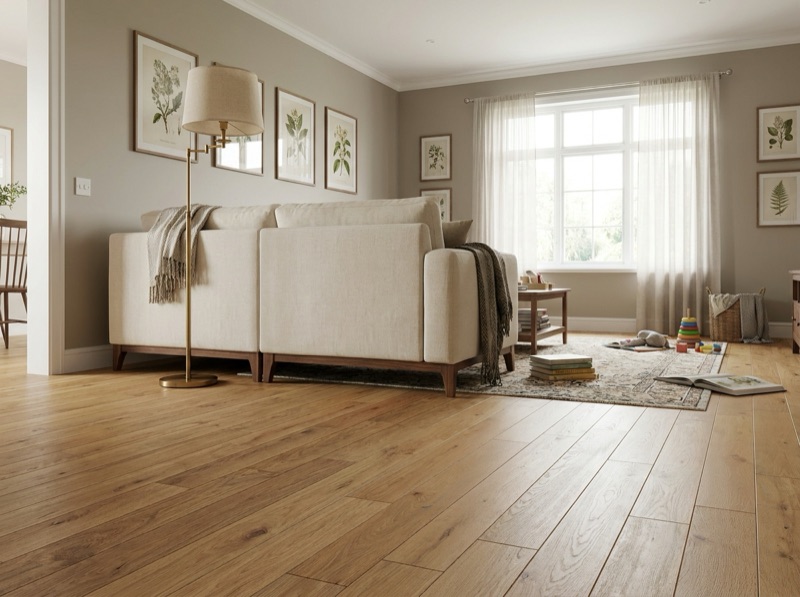
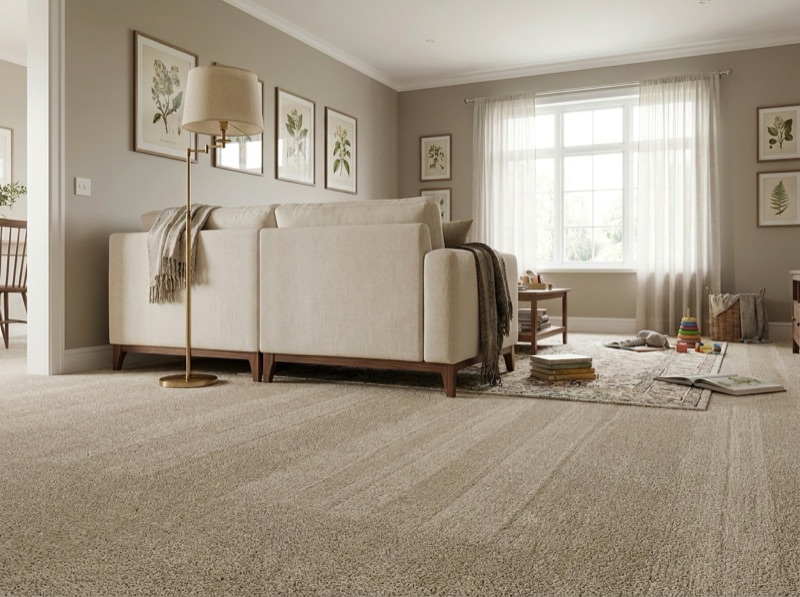
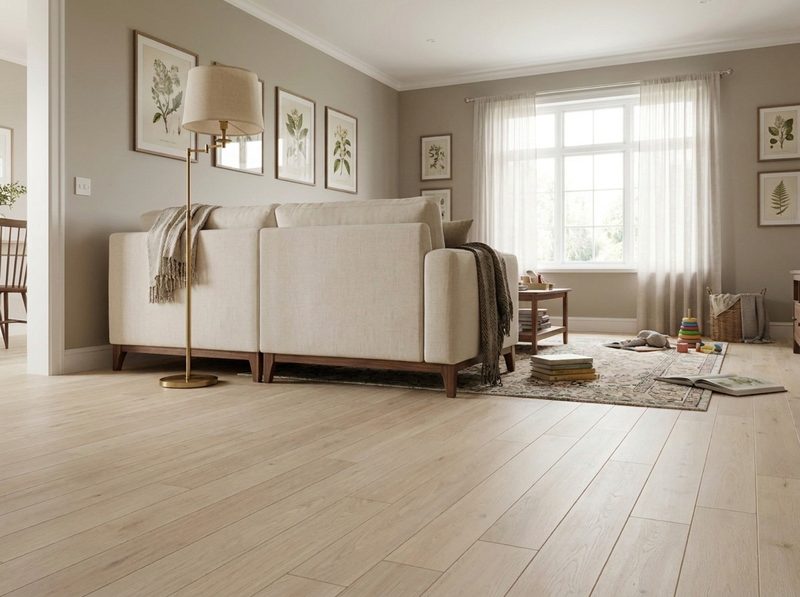
Real wood, built
to hold its shape
in more rooms.
A genuine hardwood surface over a cross-laminated core. It goes where a solid board would struggle, including over a concrete slab and over radiant heat.
Engineered hardwood is real wood. The surface you walk on is sawn from the same oak, hickory or maple as a solid board, and once it is down you cannot tell the two apart by eye. The difference is underneath. Instead of one thick piece of lumber, an engineered plank is built in layers, and those layers are what let genuine wood go into rooms where a solid floor would not be the right call.
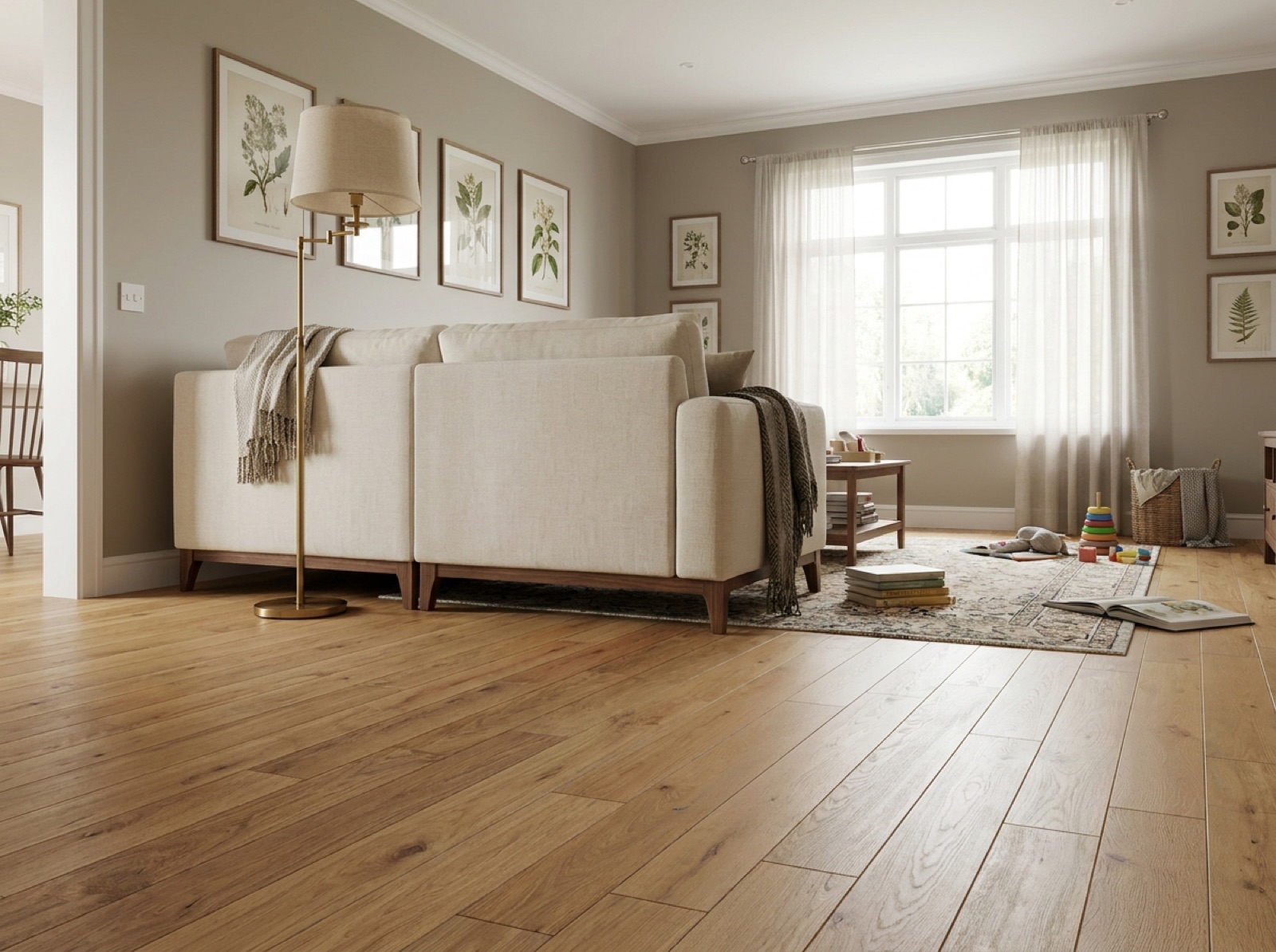
What is under the surface.
An engineered plank has two parts worth understanding. The wear layer on top is a slice of genuine hardwood. Below it sits the core, either three to twelve plies of wood with each one turned ninety degrees to the one above it, or a dense fiberboard or composite core doing the same job.
That opposing grain is the whole point. Solid wood expands and contracts across its grain as indoor humidity rises and falls, which is why solid floors need expansion gaps and a steady indoor climate. When the plies pull against each other, each layer restrains the one beside it and the plank stays close to the size it was the day it was milled. Missouri hands us humid Julys and dry, furnace-heated Januaries, so that stability is not a small thing.
The wear layer decides how long it lasts.
Wear layer thickness is the single number worth asking about, and it is printed on the spec sheet in millimeters.
- Under 1 mm. Workable in a light traffic room, but there is nothing there to sand. When the finish wears through, the floor is replaced rather than refinished.
- 2 mm. Enough for one careful refinish later in its life. A sensible middle for most homes.
- 3 mm and up. Two or more refinishes, which puts an engineered floor on the same long timeline as a solid one.
- 4 to 6 mm. Sawn-face construction that behaves like solid wood at the surface and is meant to last decades.
Overall plank thickness matters too, but it tells you about installation method and feel underfoot rather than lifespan. The wear layer is what you are actually buying.
Most engineered floors arrive prefinished, with an aluminum oxide finish cured under UV light at the factory. That is a harder and more even coating than anything applied on site, and it means no sanding dust and no drying time in your house.
Basements and rooms over concrete.
This is where engineered earns its reputation. Solid hardwood is not recommended below grade, because a concrete slab carries moisture up out of the ground year round and solid boards react to it. An engineered plank over a properly prepared slab handles that far better.
Properly prepared is the part to take seriously. The slab gets tested for moisture rather than assumed to be dry, and a vapor retarder or a moisture-control adhesive goes between the concrete and the floor. The slab also has to sit flat within the manufacturer tolerance, which usually means grinding the high spots and filling the low ones.
One honest limit: engineered hardwood is more moisture tolerant than solid wood, not waterproof. Standing water is still a problem. For a bathroom, a laundry room or a basement with a history of water, luxury vinyl plank or tile is the better answer, and we will tell you so at the counter.
Radiant heat.
Engineered is the wood floor that works over in-floor radiant heat, for the same reason it works over a slab. A solid board sitting on a heat source dries from below and can cup or gap. A cross-laminated plank stays where it was laid.
A few rules come with it. Check the maximum surface temperature in the manufacturer instructions, commonly around 80 to 85 degrees, and set the system so it never exceeds that. Bring the heat up gradually over several days before installation and again at the start of the season rather than all at once. Thinner planks move heat into the room better than thick ones. And follow the specified installation method, since most radiant assemblies call for floating or full glue-down instead of nails.
How it goes down.
Engineered hardwood installs three ways, and the subfloor usually decides which one.
- Floating. Click-together planks over an underlayment, not fastened to the subfloor. Quick, and the common choice over concrete.
- Glue-down. Bonded to the slab or subfloor with flooring adhesive. The most solid underfoot and the quietest of the three.
- Staple or nail. Over a wood subfloor, the same way a solid floor goes down.
Whichever method the product calls for, the boards acclimate in the house first and the subfloor gets flattened before anything is fastened. Skipping either step is where wood floors go wrong months later.
Engineered, solid or a look-alike.
Above grade over a wood subfloor, solid hardwood is still the benchmark. Where water is part of daily life, luxury vinyl plank handles it. Where scratch resistance at a lower price matters most, laminate is worth a look. Engineered sits in the middle: genuine wood in a place that would fight a solid board, which is also why it comes up for offices, showrooms and other commercial flooring projects.
Living with it.
- Sweep or vacuum with the beater bar switched off. Grit underfoot is what dulls a finish.
- Damp mop with a hardwood cleaner, never wet, and never with a steam mop.
- Hold indoor humidity somewhere near 35 to 55 percent through both seasons.
- Felt pads under furniture, mats at the doors from the driveway and the garage.
- Wipe spills when they happen rather than when you get to them.
See the samples in Wentzville.
Wear layer, core, finish and plank width are hard to picture from a spec sheet and obvious the second you have two samples in your hands. Bring a photo of the room and a rough budget and we will narrow it down at the counter, then take the samples home and look at them under your own light. The estimate is free, the measure happens in your house where the transitions and doorways get decided, and our own crews install it, with 15 or more years of experience and most at 25 or more years.
Engineered hardwood brands we carry in the showroom include Portercraft, Bella Cera, Paramount, Hartco, Jackson Hardwood, Casabella, Hudson Collection, National Flooring Products and Intermountain Wood Products.
Solid hardwood
One piece of lumber, sanded and refinished rather than replaced.
See hardwood CompareLuxury vinyl plank
Waterproof wear layer for the rooms where even engineered would rather not be.
See luxury vinyl plank All floorsEvery floor we carry
Hardwood, engineered, tile, vinyl, laminate and carpet under one roof.
Browse flooringRecent installs nearby.
-
-
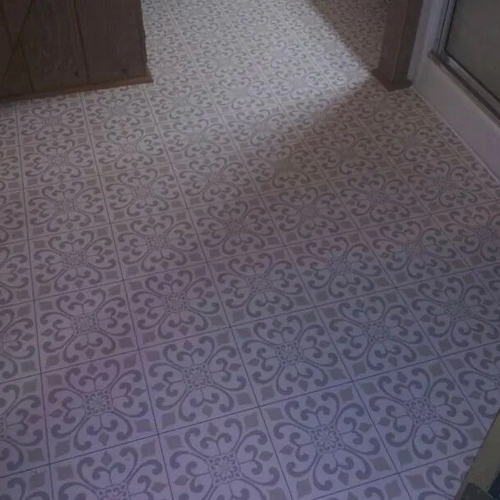 Patterned tile underfoot in a bath.
-
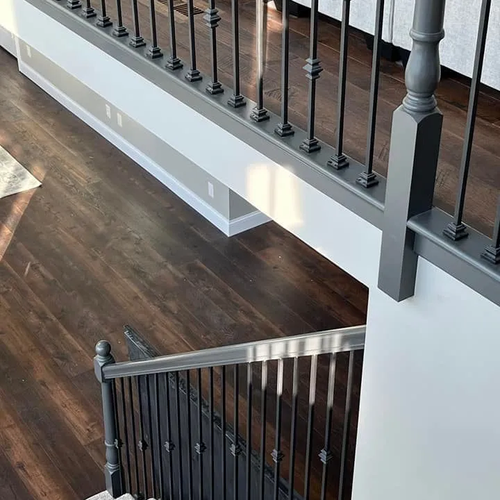 Plank on an upstairs landing.

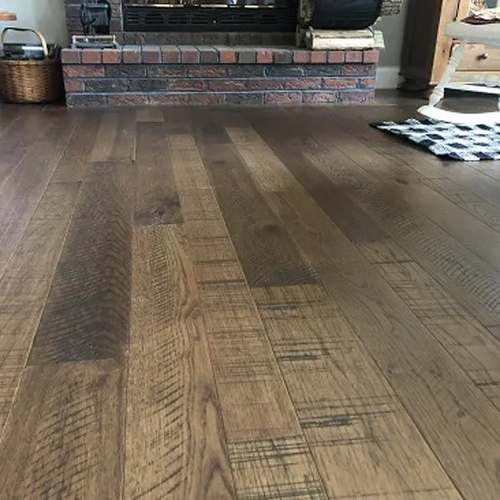
Real rooms from real installs around St. Charles County. We do not publish names or addresses. See more of our work.
“... Jonah steered my in the right direction with his expertise on several options I initially wanted to do different, I couldn’t be happier with deciding to go with his suggestions!”
Before you order.
Ask the showroom anything. Someone who sells and measures wood floors every week will pick up.
636-332-0654Yes. The surface you walk on is a genuine slice of hardwood, sawn from the same oak, hickory or maple as a solid board. What sits below it is a core of cross-laminated plies or a dense composite, and that core is what makes the plank hold its shape.
That depends entirely on the wear layer. Around 2 mm is generally good for one careful refinish, 3 mm or more allows two or more, and anything under 1 mm should be treated as a floor that gets replaced rather than sanded. Ask for the wear layer number before you buy, because it is the figure that decides how long the floor lasts.
In most cases yes, and it is the main reason engineered exists. The slab needs a moisture test rather than an assumption, a vapor retarder or a moisture-control adhesive, and a surface flat within the manufacturer tolerance. Engineered is more moisture tolerant than solid wood, but it is not waterproof, so a basement with a history of standing water is a job for luxury vinyl plank or tile.
Yes, and it is the wood floor most manufacturers approve for it. Keep the surface temperature under the limit in the product instructions, commonly around 80 to 85 degrees, bring the heat up gradually over several days rather than all at once, and use the installation method the manufacturer specifies, which is usually floating or full glue-down.
Yes. Estimates are free. Flooring Correct also offers in-showroom selection help, in-home measure and professional installation.
The engineered hardwood vocabulary, defined
Every term on the back of a sample, defined plainly. These are the ones that come up most on a engineered hardwood job. The full library is in the materials encyclopedia.
Engineered hardwood in your town
Every town below has its own engineered hardwood page, written around the housing stock that is actually there rather than the same page with the name swapped. The full map is on the service area page.
Start with a free estimate.
Tell us the rooms and roughly when you want it done. You get a real number and an in-home measure.
Get it right the first time, starting with a walk through the showroom.
636-332-0654